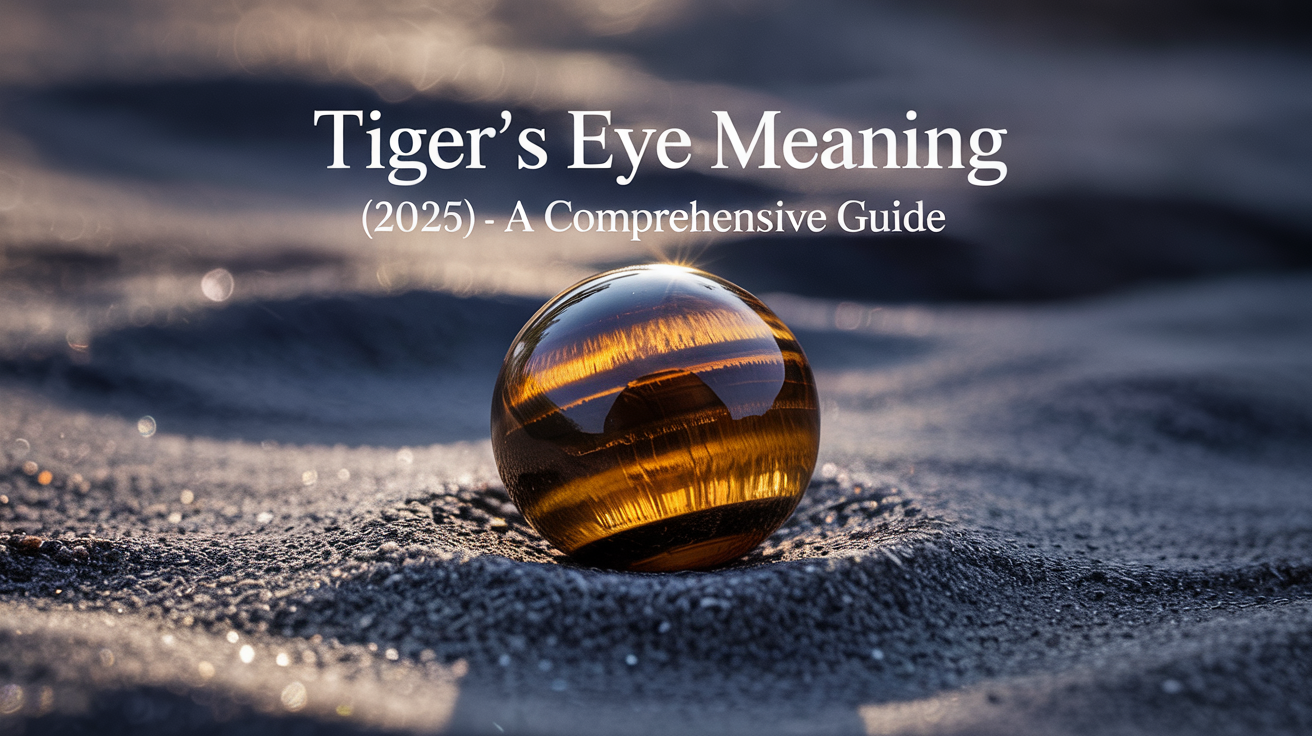
Tiger’s Eye has fascinated people for centuries. Its golden shimmer, bold bands, and striking “eye” effect make it one of the most recognized stones in the world. In 2025, the meaning of Tiger’s Eye continues to evolve as more people explore grounding practices, seek mental clarity, and use symbolic tools with intention.
This guide dives deep into the true Tiger’s Eye meaning, its history, symbolism, varieties, geological makeup, cultural roots, and modern uses—offering practical, research-backed insights instead of myths or vague claims.
Tiger’s Eye attracts people who want clarity, direction, and steady confidence. Its sleek gloss reflects light like an animal’s eye, and that visual quality created centuries of symbolism around protection, alertness, and strong personal focus.
In 2025, the stone remains popular because many people want grounding tools in fast-paced lives. Tiger’s Eye offers a mix of beauty, cultural depth, and meaning that aligns with modern emotional needs.
What this guide covers:
- Symbolic meanings and cultural origins
- Scientific explanations behind its appearance
- Varieties and their distinct meanings
- How to use Tiger’s Eye today
- How to identify real stones
- Care, cleansing, and buying tips
What Is Tiger’s Eye?
Tiger’s Eye is a silicate mineral from the quartz family. It forms when crocidolite fibers (a type of asbestos mineral) gradually transform into quartz through a process called pseudomorphing. This process preserves the stone’s fibrous structure while changing its chemical makeup.
That structure creates its signature visual phenomenon: chatoyancy—a shimmering band that moves across the surface when light hits.
Key Geological Facts
| Property | Detail |
| Mineral Family | Quartz (Silicate) |
| Formation Process | Pseudomorph of quartz after crocidolite |
| Hardness | 6.5–7 on Mohs scale |
| Luster | Silky to vitreous |
| Colors | Gold, brown, blue, red |
| Major Sources | South Africa, Western Australia, India, Brazil, Namibia |
South Africa remains the world’s largest supplier, producing high-grade Tiger’s Eye with strong chatoyancy and rich golden tones.
What makes Tiger’s Eye special: its internal fibers run in parallel lines, creating that hypnotic “moving light” effect that inspired its name.
Tiger’s Eye Meaning: Core Symbolism
Tiger’s Eye carries layers of symbolism rooted in observation, color psychology, ancient beliefs, and the stone’s visual qualities.
Strength and Grounding
Tiger’s Eye resembles a watchful eye—steady, aware, and centered. That appearance inspired associations with:
- Personal strength
- Practical thinking
- Emotional grounding
- Calm confidence
Many cultures believed it protected warriors and travelers.
Focus, Insight, and Mental Clarity
People often link Tiger’s Eye meaning to clear thinking because its reflective surface seems to highlight direction and purpose.
Modern interpretations emphasize:
- Better decision-making
- Removing mental fog
- Strengthening concentration
- Seeing situations with sharper insight
Protection and Personal Power
The stone earned a reputation as a talisman of protection in several cultures due to its “eye” effect, which symbolized watchfulness.
People associate it with:
- Shielding from negative intentions
- Strengthening personal boundaries
- Encouraging self-trust
Cultural and Historical Background
Tiger’s Eye meaning doesn’t come from guesswork—it’s rooted in centuries of cultural symbolism.
Ancient Civilizations
Egypt: Pharaohs believed it mirrored the eye of Ra, symbolizing divine vision and protection. They used it in statues, jewelry, and ceremonial breastplates.
Rome: Soldiers wore Tiger’s Eye before battle, trusting it to boost courage and awareness.
East Asia: In traditional cultures, stones with an “eye” were believed to ward off misfortune.
Traditional Beliefs and Folklore
Throughout Africa and India, Tiger’s Eye appeared in:
- Ritual objects
- Healing traditions
- Tools for intuition and observation
- Protective amulets
Tiger’s Eye in Modern Spirituality
During the 20th century, Tiger’s Eye became popular in:
- Meditation practices
- Crystal-based energy work
- Chakra alignment techniques
In 2025, it’s commonly used for:
- Grounding
- Personal empowerment
- Focus and clarity
Its popularity didn’t fade; instead, its uses expanded.
Tiger’s Eye Metaphysical Properties (Widely Attributed)
(These are symbolic and spiritual interpretations, not medical advice.)
Emotional and Mental Benefits
People often use Tiger’s Eye for:
- Confidence during transitions
- Stable emotions
- Reducing overthinking
- Logical decision-making
- Avoiding impulsive reactions
Spiritual Associations
Symbolically, Tiger’s Eye connects to:
- Solar energy
- Personal strength
- Disciplined willpower
- Root and Solar Plexus Chakra alignment
Many use it when setting goals or taking steps toward new ambitions.
Energetic Personality Traits Linked to the Stone
According to modern interpretations, Tiger’s Eye supports:
- Steady determination
- Courage blended with logic
- Quiet assertiveness
- Balanced motivation
- Clear judgment during challenges
Varieties of Tiger’s Eye and Their Meanings
Not all Tiger’s Eye looks the same, and each variety carries unique traits and symbolic interpretations.
Golden Tiger’s Eye Meaning
The classic golden stone symbolizes:
- Confidence
- Mental clarity
- Strong decision-making
- Protection and awareness
Its warm tones relate to solar energy and optimism.
Blue Tiger’s Eye (Hawk’s Eye) Meaning
Blue Tiger’s Eye, formed earlier in the pseudomorphing process, is linked to:
- Calm communication
- Deep insight
- Emotional regulation
- Reducing anxiety
Its reflective blue-gray tones feel cooler and more soothing.
Red Tiger’s Eye Meaning
Heat-treated naturally or by controlled human methods, red Tiger’s Eye represents:
- Vitality
- Drive
- Passion
- Action
People use it for motivation and grounded energy.
Rare Varieties
Tiger Iron: A combination of Tiger’s Eye, hematite, and red jasper.
Symbolizes endurance, resilience, and determination.
Multi-Banded Tiger’s Eye: Includes silver-blue or dark streaks.
Represents versatility and adaptive strength.
Hematite-Included Tiger’s Eye: Reflects grounding and stability.
Scientific & Geological Attributes That Shape Its Symbolism
Symbolism often starts with observation. Tiger’s Eye’s meaning reflects the qualities that stand out in its appearance.
Chatoyancy and the “Eye” Effect
Chatoyancy means:
- A narrow, bright band moves across the surface
- Light reflects in a single direction
- The stone appears alive or watchful
This effect inspired beliefs around protection, focus, and alertness.
Color Psychology
Color influences emotion. Tiger’s Eye meaning aligns with these insights:
| Color | Psychological Association | Meaning Connection |
| Gold | Cheerfulness, clarity, optimism | Confidence + clarity |
| Brown | Grounding, stability, security | Centered energy |
| Blue | Calmness, depth, communication | Insight + emotional peace |
| Red | Passion, strength, vitality | Drive + motivation |
Durability and Harness
With a hardness of 6.5–7, Tiger’s Eye:
- Resists scratches
- Works well in jewelry
- Represents symbolic strength
Its tough nature reinforces themes of resilience and steadiness.
How Tiger’s Eye Is Used Today
In 2025, Tiger’s Eye blends style, wellness, and symbolism.
Tiger’s Eye Jewelry
People wear it as:
- Bracelets
- Necklaces
- Rings
- Pendants
- Beads
Why it’s popular:
Wearing it keeps its symbolic meaning close to the body—especially near the Solar Plexus area associated with confidence.
Home and Workspace Placement
People place Tiger’s Eye where they want clarity or grounding, such as:
- Work desks
- Office shelves
- Entryways
- Living room displays
- Meditation spaces
It’s widely used to encourage productivity and calm focus.
Meditation and Intention Setting
Tiger’s Eye is used alongside:
- Breathwork
- Visualization
- Journaling
- Affirmations
- Daily goal-setting rituals
Because of its structured internal lines, many find it helpful for redirecting scattered thoughts.
Fashion and Design in 2025
Interior designers love Tiger’s Eye for:
- Accent pieces
- Statement décor
- Polished slabs
- Artistic carvings
Its warm hues complement natural wood and modern earth-toned aesthetics.
Authenticity: Identifying Real Tiger’s Eye
The market is full of imitations. Knowing how to spot the real thing protects your investment.
Natural vs. Synthetic
Real Tiger’s Eye has:
✔ Distinct parallel fibers
✔ Shimmering chatoyancy that moves smoothly
✔ Weight consistent with quartz
✔ Slight temperature coolness when touched
Common fakes include glass, resin, and plastic.
Heat-Treated and Dyed Variants
Heat treatment enhances red tones. Dyeing creates brighter-than-natural blue, green, or purple colors.
How to spot dyes:
- Unnaturally vivid colors
- Color pooled in cracks or pits
- Uniform color saturation with no natural banding
Quality Grading
Higher grades show:
- Strong chatoyancy
- Rich color contrast
- Clean, visible banding
- Minimal cracks
- Smooth polish
Lower grades appear dull or cloudy.
Buying Guide: Choosing the Right Tiger’s Eye (2025 Trends)
Knowing what affects price and quality helps you make smart choices.
Pricing Factor
| Factor | Influence |
| Chatoyancy Strength | Highest impact on price |
| Color Saturation | Golden and blue tones valued highly |
| Size | Larger stones cost more per gram |
| Cut | Well-polished cabochons cost more |
| Rarity | Tiger Iron and top-grade Blue Tiger’s Eye fetch higher prices |
Average prices in 2025:
- Bracelets: $15–$120
- Cabochons: $8–$200 (depending on size/grade)
- Premium slabs: $80–$400
Where to Buy
Best places:
- Reputable crystal boutiques
- Gemstone fairs
- Established online mineral shops
- Certified sellers with testing reports
Red flags:
- Ultra-low prices
- Poor-quality photos
- Lack of origin information
- Sellers unwilling to answer questions
Ethical Sourcing
Tiger’s Eye mining primarily occurs in:
- South Africa
- Namibia
- India
- Western Australia
Look for vendors with:
- Conflict-free sourcing statements
- Mining transparency
- Environmental responsibility efforts
- Fair-wage policies
Care, Cleansing & Maintenance
Tiger’s Eye is durable, but proper care maintains appearance and energy for those who value symbolic use.
Physical Care
- Clean with mild soap and water.
- Avoid harsh chemicals.
- Store separately to avoid scratches.
- Keep away from sudden temperature changes.
Energetic Cleansing (Symbolic Practices)
People who use stones energetically often cleanse them through:
- Smoke (sage or incense)
- Gentle sunlight (short exposure only)
- Sound bowls
- Fresh air
Recharging Practices
Common symbolic recharging methods include:
- Setting intentions while holding it
- Leaving it near plants or natural earth
- Meditation with focused breathing
Tiger’s Eye FAQ (Clarified and Practical)
Is Tiger’s Eye safe in water?
Yes, short exposure is safe because it’s quartz-based. Extended soaking is not recommended.
Can you wear Tiger’s Eye every day?
Yes. Its hardness makes it suitable for daily wear.
Can Tiger’s Eye be paired with other stones?
Yes—especially with grounding stones like hematite or black onyx.
Why do some stones look blue or red?
Blue forms naturally. Red usually comes from heat treatments enhancing the natural iron content.
Conclusion
Tiger’s Eye symbolizes clarity, courage, grounded energy, and meaningful focus. Its shimmering eye-like surface has captured the imagination of ancient warriors, modern professionals, and spiritual practitioners alike.
In 2025, Tiger’s Eye meaning remains powerful—offering timeless themes of strength, awareness, confidence, and calm determination.
Whether worn as jewelry, placed in a workspace, or used in meditation, Tiger’s Eye invites you to move through life with steady eyes, clear thinking, and unwavering focus.
If you want, I can also create:
✨ SEO keywords cluster
✨ Meta title + meta description
✨ Featured snippet answer
✨ Internal linking strategy
✨ A downloadable PDF version of this article
Just tell me what you need.

Founder of PunnyPeeks and master of celebration magic, David Mass is the creative spark behind the brand’s bold, balloon-filled brilliance. With an eye for color, a flair for design, and a passion for making people smile, David transforms events into unforgettable experiences. From quirky puns to perfectly curated party decor, he believes that every occasion deserves a splash of fun and a whole lot of heart.