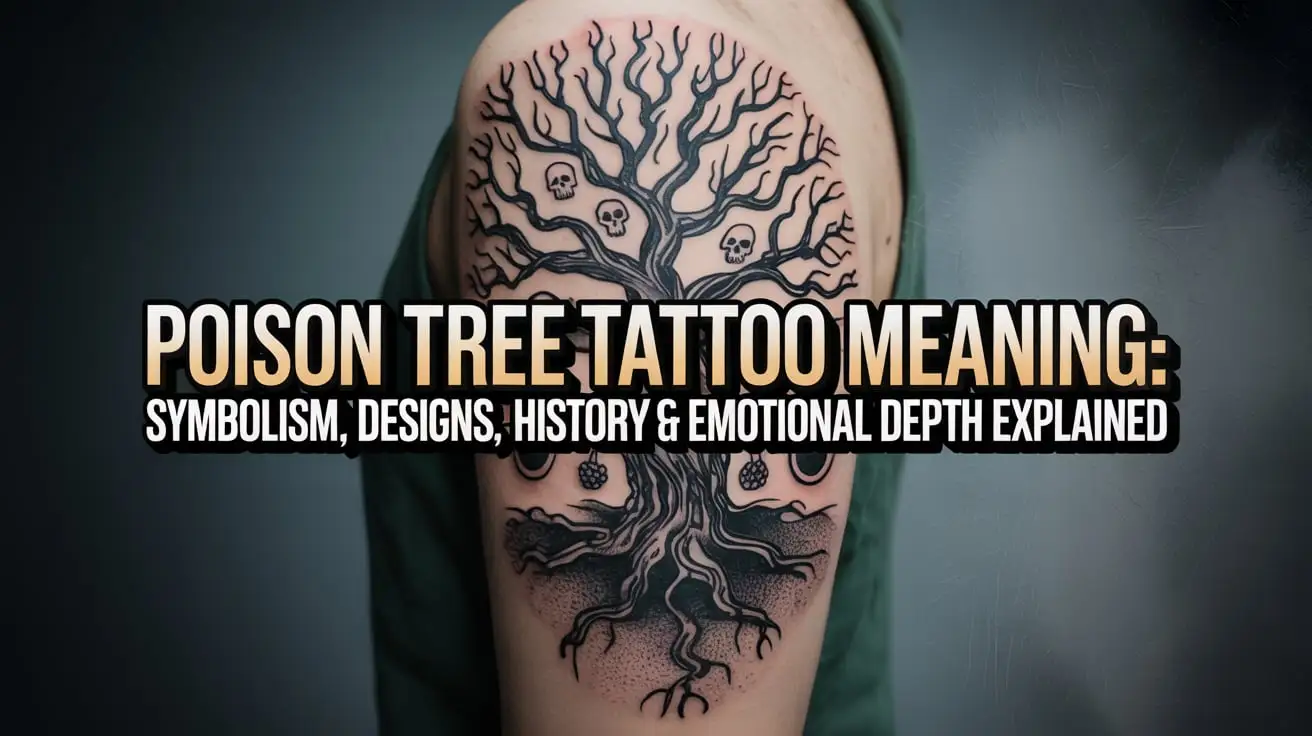
A poison tree tattoo is more than ink. It’s a symbol that blends beauty with danger, mystery with truth, and pain with transformation. People choose this tattoo because it quietly tells a story—one filled with resilience, personal growth, and the courage to face emotions most people hide.
This article breaks down the Poison Tree Tattoo Meaning from every angle: psychology, symbolism, culture, art styles, variations, placement meanings, real-life stories, and everything you need before getting one. You’ll learn why this design has become one of the most powerful and emotionally honest tattoo styles of the decade.
Let’s dive in.
Poison Tree Tattoo Meaning: Why This Symbol Holds Such Deep Power
A poison tree tattoo carries layered meanings that often reflect the emotional journey of the wearer. The tree itself represents growth and life, yet the “poison” element adds complexity—symbolizing inner wounds, unspoken anger, or battles fought in silence.
What makes this tattoo so compelling is the contrast. Trees usually symbolize life, hope, stability. But when poison enters the picture, the symbolism shifts, giving the image a darker, more introspective tone. That contrast is exactly why this tattoo has become so popular among people who want their art to reveal something real, raw, and deeply human.
You’ll often see this tattoo on individuals who’ve survived emotional storms, toxic relationships, or internal struggles. It becomes a badge of awareness—a reminder that healing isn’t linear and that growth sometimes stems from painful places.
Core Meaning of a Poison Tree Tattoo
A poison tree tattoo isn’t chosen randomly. Every element—from the branches to the roots to the poisonous leaves—can reflect a specific emotional or symbolic message. Let’s explore the most common interpretations.
Poison Tree Tattoo Meaning: Inner Darkness and Hidden Pain
Some emotions sit quietly, becoming heavier with time. The poison tree mirrors this reality. The poison isn’t always visible on the surface, just like hidden pain isn’t written on someone’s face.
People who choose this tattoo often use it to represent:
- Buried trauma
- Repressed emotions
- Years of silent suffering
- Pain they grew through, rather than escaped
It becomes a symbolic release. Instead of bottling these emotions inside—letting them become poison—the tattoo represents acknowledgment and acceptance.
Example Analogy:
Think of untreated wounds. Left unattended, they fester. The poison tree acts as a reminder to address emotional wounds before they grow roots.
Poison Tree Tattoo Meaning: The Dangers of Holding Grudges
William Blake’s iconic poem A Poison Tree is one of the biggest inspirations behind this tattoo.
Link to original poem:In the poem, Blake explains how unspoken anger grows into something poisonous and destructive. Instead of expressing the anger, the narrator nurtures it—watering it with fears and tears—until it becomes a deadly tree bearing poisonous fruit.
This poem’s message is timeless:
unspoken anger becomes poison.
This tattoo is often chosen by people who’ve learned this lesson firsthand. It symbolizes:
- The cost of holding grudges
- The weight of resentment
- The harm caused by internalized anger
- The importance of emotional vulnerability
It’s a tattoo with a message: “Speak your truth before it turns toxic.”
Poison Tree Tattoo Meaning: Growth Through Adversity
Every poison tree has roots. These roots often symbolize negative experiences, trauma, or harmful influences that shaped someone. But the tree itself—standing tall despite its poison—reflects resilience.
This meaning resonates with anyone who has grown through:
- Childhood trauma
- Toxic relationships
- Depression or anxiety
- Life-changing losses
- Self-destructive phases
Instead of hiding their past, people wear it as art.
The poison becomes part of their story but not their identity.
Poison Tree Tattoo Meaning: Duality of Human Nature
The poison tree tattoo often explores the idea that every person carries both light and dark within them.
This idea of duality includes:
- The contrast between who we seem to be and who we truly are
- The shadow self—the part most people hide
- The internal battle between goodness and chaos
The tree becomes a visual metaphor for complexity.
Not everything beautiful is safe. Not everything dark is dangerous.
Poison Tree Tattoo Meaning: Protection and Boundaries
In nature, poisonous plants aren’t evil—they’re protective. They defend themselves from threats.
This tattoo often represents:
- Boundaries
- Self-protection
- Strength wrapped in softness
- Warning others not to misuse someone’s kindness
It’s subtle. Someone sees a beautiful tree, but beneath it lies the warning:
“I will protect myself now.”
Cultural and Historical Symbolism Behind Poison Trees
Poisonous trees and plants have played major roles in mythology, literature, and ancient cultures. Each adds another layer of meaning to the tattoo.
Poison Tree Tattoo Meaning in Mythology and Folklore
Many cultures saw poisonous trees as sacred or magical. The symbolism varies but often centers around fear, respect, and mysticism.
Here are a few mythological influences:
- Norse Mythology:
Yggdrasil, the world tree, is often interpreted with both life-giving and death-touching aspects. - Greek Mythology:
Plants like hemlock and mandrake were tied to sorcery, transformation, and punishment. - Hindu and Southeast Asian Folklore:
Certain poisonous trees symbolize karma and the consequences of harmful actions.
In tattoos, these stories inspire meanings related to fate, balance, and the consequences of hidden intentions.
Poison Tree Tattoo Meaning in Literature
William Blake’s A Poison Tree is the most direct literary influence. But other stories also contribute:
- Poison apple in Snow White
- Forbidden fruit in biblical texts
- Deadly nightshade in gothic literature
- Yew trees symbolizing death and rebirth in British tales
People who love literature often incorporate quotes, pages, or poetic lines around the tattoo to deepen the meaning.
Botanical Significance of Real Poisonous Trees
Real botanical species also shape the meaning. Here are some commonly used trees and their symbolism:
| Poisonous Tree | Symbolizes | Known For |
| Manchineel | Hidden danger, deadly beauty | One of the most toxic trees on earth |
| Oleander | Forbidden love, temptation | Beautiful but poisonous flowers |
| Yew | Death, rebirth, transformation | Used in ancient rituals |
| Locoweed | Madness, unpredictability | Toxic to animals and humans |
These trees can be woven into tattoo designs to reflect specific themes.
Poison Tree Tattoo Meaning by Emotion and Life Stage
Different people connect with the poison tree during different chapters of life.
Poison Tree Tattoo Meaning: Healing After Betrayal
This tattoo resonates with those recovering from:
- Cheating partners
- Toxic friendships
- Family betrayal
- Broken trust
Instead of staying stuck in bitterness, the tattoo becomes a symbol of release.
Poison Tree Tattoo Meaning: Hidden Strength
Some people look soft on the outside but carry intense emotional endurance.
The poison tree reflects that quiet strength.
It communicates:
“I survived things you may never know.”
Poison Tree Tattoo Meaning: Control Over Anger
Many choose this design as a reminder to:
- Express emotions early
- Avoid resentment
- Maintain emotional discipline
- Prevent bitterness from taking root
It’s a self-awareness symbol.
Poison Tree Tattoo Meaning: Growth After Trauma
When someone starts fresh after years of pain, the poison tree becomes symbolic of transformation.
The poison represents the past.
The tree represents who they are becoming.
Popular Poison Tree Tattoo Designs and Their Interpretations
Design style changes the meaning just as much as the symbolism.
Deadly Fruit Designs
Apples, berries, or fruit dripping with venom add layers of meaning such as:
- Forbidden love
- Temptation
- Toxic attachments
- Desires that hurt you
This design is dramatic and great for realism or neo-traditional styles.
Blackened or Twisted Branches
Branch shapes reflect emotional states. Twisted branches symbolize:
- Internal chaos
- Bad memories
- Inner conflict
Blackened branches often symbolize a dark past that no longer defines the wearer.
Root-Based Poison Tree Designs
Roots represent what lies beneath. Poison running through the roots symbolizes:
- Childhood trauma
- Generational patterns
- Burdens inherited from family systems
This design works beautifully on the thigh, back, or ribs.
Snake and Poison Tree Combination
A snake adds messages about:
- Temptation
- Deception
- Wisdom
- Rebirth
Combined with the tree, it often symbolizes toxic love or personal transformation.
Read More:LMS Meaning Text (Hiatus Meaning): A Complete Guide to Understanding Modern Texting Lingo
Skull + Poison Tree
For those who want darker symbolism, a skull signifies:
- Mortality
- Consequences
- Deep self-reflection
- Shadow work
This version often appears in gothic or black-work styles.
Minimalist Poison Tree Designs
Not all poison tree designs are dark or heavy. Minimalist versions capture meaning in simple lines, perfect for people who want subtle symbolism without graphic detail.
Color vs. Black & Grey Tattoos
Color affects meaning:
| Color | Symbolism |
| Green | Classic poison, rebirth, envy |
| Purple | Mystery, trauma, psychic depth |
| Red | Anger, passion, danger |
| Black | Shadow work, suppression, resilience |
Your artist can help choose a palette that reflects your story.
Poison Tree Tattoo Placement Meanings
Placement adds emotional value. Here’s what each area often represents:
Forearm Poison Tree Tattoo Meaning
Represents openness and vulnerability. You aren’t hiding your story anymore.
Back Poison Tree Tattoo Meaning
Reflects burdens carried in silence.
Many choose this to symbolize pain that shaped their backbone.
Chest Poison Tree Tattoo Meaning
Symbolizes emotional protection or pain carried close to the heart.
Thigh or Hip Poison Tree Tattoo Meaning
A more intimate placement often tied to:
- Personal healing
- Private transformation
- Sexuality and emotional vulnerability
Shoulder Poison Tree Tattoo Meaning
Represents weight from the past that you continue to carry but also grow from.
Who Chooses a Poison Tree Tattoo?
This tattoo is most popular among people who identify with:
- Survivors of emotional trauma
- Individuals healing from betrayal
- People working through anger or resentment
- Lovers of dark aesthetics
- Those interested in psychology, literature, or mythology
It appeals to anyone who sees beauty in complexity.
Pros and Cons of Choosing a Poison Tree Tattoo
Pros
- Powerful, layered symbolism
- Works with multiple art styles
- Easy to customize
- Visually unique
Cons
- Can appear dark to outsiders
- Requires a skilled artist for detail
- May prompt personal questions from strangers
Poison Tree vs. Other Tree Tattoos (Comparison Table)
| Tattoo Design | Meaning | Emotional Tone |
| Poison Tree | Hidden pain, resentment, protection | Deep, introspective |
| Oak Tree | Strength, stability | Confident |
| Willow Tree | Grief, resilience | Soft, emotional |
| Cherry Blossom Tree | Beauty, impermanence | Hopeful, delicate |
This helps you choose a tree that reflects your story.
Case Studies: Real Meaning Behind Poison Tree Tattoos
Case Study: Breaking a Toxic Cycle
A woman in her late 20s chose a poison tree tattoo with twisted roots to represent generational trauma. She described it as her promise to stop passing pain forward. Her tree symbolizes transformation—turning poison into wisdom.
Case Study: Healing After Betrayal
A man used the tattoo as closure after a painful breakup.
He added a single poisonous fruit to symbolize the one betrayal that changed him.
The tattoo helped him move on.
Case Study: Embracing the Shadow Self
A person exploring their mental health journey chose a black-work poison tree to represent the parts of themselves they used to fear. The tattoo became a reminder that healing means accepting every side of yourself—not just the pretty parts.
Tips Before Getting a Poison Tree Tattoo
Here’s what to consider:
- Research the specific poisonous tree species you want
- Explore different art styles (realism, linework, neo-traditional, black-work)
- Bring references for fruit, branches, roots, or mythical elements
- Choose placement based on emotional meaning
- Think long-term—avoid tiny details that blur over time
A poison tree tattoo is emotional art—take your time designing it.
FAQs About Poison Tree Tattoo Meaning
What does a poison tree tattoo represent?
It symbolizes hidden pain, resentment, emotional survival, boundaries, and inner strength.
Is the tattoo negative or positive?
It can be either. Some see it as a symbol of darkness; others view it as transformation and healing.
Do different poisonous trees have different meanings?
Yes. Manchineel symbolizes danger, oleander represents toxic beauty, and yew symbolizes death and rebirth.
Does color change the tattoo’s meaning?
Absolutely—green symbolizes poison, purple symbolizes mystery, red symbolizes anger, black symbolizes trauma.
Is the tattoo more common for men or women?
Both. The design is unisex and appeals to anyone seeking emotional depth in their body art.
Conclusion: The Poison Tree Tattoo Is More Than Dark Art
A poison tree tattoo is a symbol of truth—raw, shadowy, and incredibly powerful. It represents the wounds that shaped you, the anger you’ve learned to release, and the resilience you’ve built along the way. It’s art with meaning. Pain with purpose. Darkness turned into growth.
If you choose to wear a poison tree on your skin, let it reflect your story—the one rooted in pain but rising toward something brighter.

Founder of PunnyPeeks and master of celebration magic, David Mass is the creative spark behind the brand’s bold, balloon-filled brilliance. With an eye for color, a flair for design, and a passion for making people smile, David transforms events into unforgettable experiences. From quirky puns to perfectly curated party decor, he believes that every occasion deserves a splash of fun and a whole lot of heart.