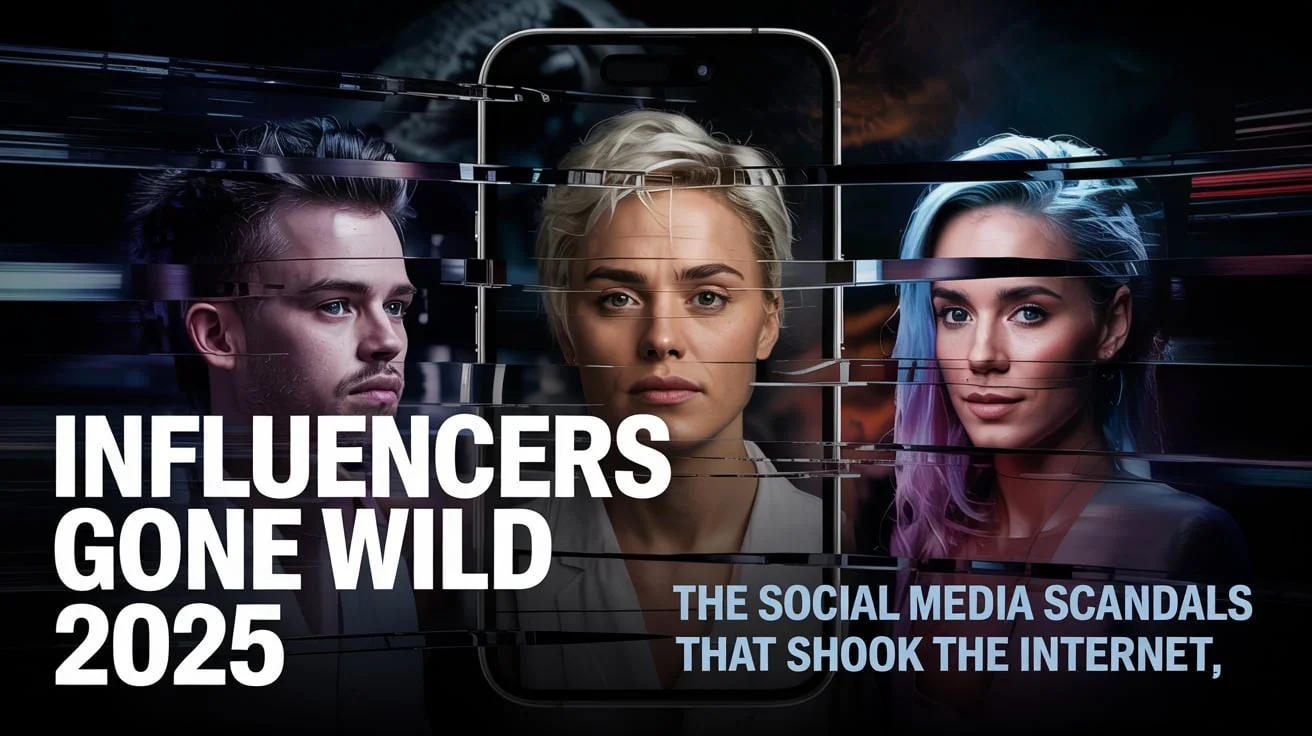
The influencer world never sleeps — and in 2025, it didn’t just wake up; it exploded.
From shocking comebacks to AI-driven deception, this year has been packed with scandals that left millions of followers questioning who they can trust online. The term “Influencers GoneWild 2025” became a trending phrase across Twitter, TikTok, and Reddit, capturing how fast creators can rise, fall, and sometimes rise again.
This in-depth breakdown exposes the year’s most talked-about influencer controversies, examines what really happened, and explores what these events mean for the future of digital fame
TL;DR — Quick Summary
If you just want the highlights, here’s what went down:
- David Dobrik made a controversial comeback after years in limbo.
- Tana Mongeau and Cody Ko faced backlash over allegations involving inappropriate fan interactions.
- Content houses — once the dream of every young creator — fell apart amid lawsuits, burnout, and exploitation claims.
- AI deepfakes invaded influencer culture, damaging reputations and sparking lawsuits.
- Brands and platforms tightened the rules, pushing the influencer industry toward more accountability.
Now, let’s dive into the stories, data, and consequences that made these scandals unforgettable.
The New Age of Influencer Accountability
The influencer economy isn’t just about viral videos anymore — it’s a billion-dollar machine. According to Influencer Marketing Hub, the industry is worth $24 billion in 2025, up from $21 billion in 2023. With that kind of money on the line, every scandal sends shockwaves through advertisers, fans, and even stock prices.
For years, scandals meant temporary “cancellations.” But in 2025, the game changed. Legal action, stricter brand contracts, and AI-driven investigations made influencer controversies harder to bury. The “Influencers GoneWild 2025” wave is proof that fame without boundaries can have real-world consequences.
Timeline of Major Influencer Scandals (2019–2025)
| Year | Event | Key Details | Impact |
| 2019 | James Charles vs. Tati Westbrook | YouTube beauty feud ignites “cancel culture” wave | Millions unsubscribed overnight |
| 2021 | David Dobrik’s “Vlog Squad” scandal | Allegations of assault and negligence during filming | Sponsors withdrew; YouTube demonetized |
| 2023 | Hype House fractures | Exploitation and pay disputes emerge | Content house model questioned |
| 2024 | Rise of AI deepfake influencers | Fake celebrity content monetized | Legal gray areas exposed |
| 2025 | David Dobrik returns, AI scandals explode | Comebacks meet deepfake chaos | Major shift in influencer policies |
This timeline shows how quickly internet fame turned from admiration to caution — a pattern that defines 2025’s digital chaos.
Case Study: David Dobrik’s Controversial Comeback
Keyword: Influencers GoneWild 2025 – David Dobrik comeback scandal
Few creators represent the highs and lows of influencer culture like David Dobrik. Once hailed as YouTube’s golden boy, Dobrik’s empire crumbled in 2021 after serious misconduct allegations involving his “Vlog Squad.” Major sponsors — including DoorDash and EA Sports — dropped him, and YouTube suspended ad revenue on his channels.
In 2025, Dobrik quietly returned with a new podcast and a promise to “own up to the past.” The internet wasn’t buying it right away. Hashtags like #DobrikRedemption and #StillCancelled trended for weeks.
Brand Fallout Facts
- Dobrik reportedly lost $3 million in annual brand deals between 2021–2022.
- His return pocast drew 8 million YouTube views in 48 hours, proving controversy still fuels curiosity.
- PR experts estimate a 60% trust deficit in his audience engagement rate post-comeback.
Quote:
“The internet never forgets — but it sometimes forgives if the story feels authentic.” – Digital Ethics Analyst, Marcy Lane, The Verge (Feb 2025)
Dobrik’s case highlights a key theme of Influencers GoneWild 2025: redemption is marketable, but trust is fragile.
Case Study: Tana Mongeau & Cody Ko – Blurred Lines of Fame
Keyword: Social media scandals 2025 – Tana Mongeau controversy
Tana Mongeau, a self-made YouTube and OnlyFans star, has been no stranger to controversy. But in early 2025, screenshots and testimonies surfaced accusing her and fellow creator Cody Ko of engaging in questionable interactions with underage fans during meet-ups.
The story erupted across Reddit and Twitter, prompting calls for accountability. Although neither faced criminal charges, multiple brands paused collaborations. Spotify reportedly delayed a major podcast release featuring both influencers.
Reactions and Consequences
- TikTok bans: Both creators’ live privileges were suspended for “community safety” violations.
- Sponsorship impact: Tana lost a $250,000 brand partnership with a fashion label.
- Public opinion: A YouGov poll showed 72% of Gen Z respondents wanted stricter guidelines for fan interactions.
This scandal underscored the ethical gray area between fame and fandom — a recurring theme in the Influencers GoneWild 2025 narrative.
The Fall of Content Houses: Exploitation Behind the Glam
Keyword: Content house scandals 2025
Once seen as dream incubators for aspiring influencers, content houses like Hype House, Sway House, and Clubhouse promised collaboration and creativity. By 2025, that dream had crumbled.
Behind the scenes, creators faced exploitative contracts, mental-health burnout, and unpaid labor allegations. Several lawsuits claimed house managers pocketed profits from creators’ sponsorships while providing unsafe living conditions.
Data Snapshot: Content House Collapse
| Issue | Example | Outcome |
| Contract exploitation | Former Sway House member sued for unpaid ad revenue | Settled confidentially |
| Toxic work culture | Allegations of sleep deprivation and manipulation | Public apology issued |
| Unethical management | 2024 report showed “house cut” up to 50% of deals | Industry reform proposals followed |
Quote:
“The content-house model failed because it treated people like output, not creators.” – Dr. Alan Reed, Digital Labor Researcher, NYU, 2025
This collapse taught brands a valuable lesson: creativity cannot thrive under coercion.
The Rise of AI Deepfakes and Virtual Deception
Keyword: AI deepfake influencer scandal 2025
The most disturbing trend of Influencers GoneWild 2025 wasn’t human misconduct — it was AI manipulation. In early 2025, dozens of creators discovered AI-generated explicit images of themselves circulating online.
One of the most publicized cases involved Indian influencer Archita Phukan, known as “BabyDollArchi,” whose AI-altered images were sold without consent. Police traced the operation to a former associate, leading to one of the first criminal cases under India’s amended IT Act.
Global Impact of AI Deepfake Scandals
- Over 15,000 AI-generated influencer fakes identified by February 2025.
- 83% of creators surveyed by Reuters Digital Safety Index feared misuse of their likeness.
- Instagram introduced “Synthetic Media” labels for suspicious uploads.
- Reddit and X (Twitter) banned “revenge deepfakes” in updated terms of service.
Quote:
“AI isn’t just creating fakes; it’s manufacturing trauma for real people.” – Sasha V., AI Policy Advocate, 2025
The line between identity and illusion blurred. Deepfakes became not just technological curiosities but weapons of defamation.
When Brands and Platforms Finally Stepped In
2025 marked the year when brands stopped looking the other way. In previous years, a simple apology video could save a sponsorship. Not anymore.
How Brands Changed Their Contracts
- Morality clauses now allow immediate termination for misconduct.
- Reputation insurance clauses protect brands from scandal-related loss.
- Due-diligence audits are required before signing influencer partnerships.
Example:
Adidas ended its $2 million campaign with an influencer accused of faking a charity donation, citing a “zero-tolerance integrity policy.”
Meanwhile, platforms like YouTube, TikTok, and Instagram introduced stricter verification protocols:
- TikTok’s Creator ID system now requires biometric verification.
- YouTube added “behavioral flagging” for repeat ToS violators.
- Instagram launched Creator Trust Scores that weigh credibility over followers.
These systemic shifts reduced impulsive “cancel culture” and replaced it with structured accountability.
Cross-Cutting Themes from 2025’s Scandals
Power and Exploitation
Many controversies involved power imbalances — creators wielding influence over younger fans or team members. The digital world now demands clearer consent and mentorship boundaries.
Mental Health and Burnout
The constant cycle of creation, cancellation, and comeback has left influencers exhausted. Surveys show 1 in 3 full-time creators report clinical anxiety or depression.
Technology as Both Tool and Threat
AI tools gave influencers new creative power — and abusers new ways to harm them. Platforms are racing to regulate synthetic media faster than bad actors can exploit it.
Public Redemption
2025 revealed that audiences love redemption arcs, but only when backed by transparency. Empty apologies no longer work; proof of change does.
Read More: Mashable-Style Hint Guide for Today’s NYT Connections Puzzle
Legal and Policy Shifts Around the World
In response to scandals, governments and regulators took action:
- United States: The Federal Trade Commission (FTC) updated its influencer endorsement guidelines in 2025, demanding full disclosure for any AI-generated content.
- European Union: Enforced the AI Transparency Act, requiring platforms to watermark synthetic content.
- India: Amended the Information Technology Rules to criminalize non-consensual deepfakes.
- United Kingdom: Proposed the Digital Creator Protection Bill to define influencer labor rights.
These measures show how online scandals now shape global legislation — another sign that “influencer drama” has real economic and ethical stakes.
What Brands, Creators, and Platforms Can Learn
For Creators
- Build legal contracts that protect image rights.
- Keep clear boundaries with fans and collaborators.
- Have a crisis communication plan — know what to say before disaster strikes.
- Diversify income streams to reduce dependence on brand deals.
For Brands
- Conduct background checks and audience sentiment analysis before partnerships.
- Insert morality and transparency clauses into influencer contracts.
- Develop a 3-step PR strategy: Investigate → Respond → Rebuild.
For Platforms
- Use AI moderation tools that can flag deepfakes and misleading edits.
- Invest in creator well-being initiatives.
- Offer verified redemption pathways for rehabilitated influencers.
Table: Top 2025 Influencer Scandals at a Glance
| Influencer | Scandal Type | Brand Fallout | Legal Status | Audience Impact |
| David Dobrik | Misconduct comeback | Lost 5 major sponsors | Settled privately | 60% trust deficit |
| Tana Mongeau & Cody Ko | Alleged fan exploitation | Sponsorship freezes | No charges filed | 72% disapproval |
| Hype House | Contract abuse | Brand walkouts | Civil suits | Model collapse |
| Archita Phukan | AI deepfake exploitation | Public support surge | Ongoing case | 2M+ new followers |
| Unnamed influencer (Europe) | Charity fraud | Adidas campaign ended | Investigation open | Massive backlash |
The Bigger Picture: Why These Scandals Matter
The Influencers GoneWild 2025 phenomenon isn’t just about gossip — it’s a mirror of our cultural moment.
We’ve reached an era where digital identity, ethics, and law intersect daily. Scandals once dismissed as “internet drama” now shape brand budgets, legal systems, and mental health awareness.
Influencers no longer live outside accountability. Their lives, businesses, and even AI replicas are part of a hyper-connected ecosystem where every action echoes globally.
Key Takeaways
- The influencer industry’s growth has outpaced regulation, but 2025 showed progress.
- Deepfakes, exploitation, and fan manipulation are new frontiers of digital ethics.
- Authenticity and accountability are now the real currencies of influence.
- Brands, creators, and platforms must collaborate — or risk public distrust.
Conclusion
2025 reminded the world that fame without responsibility is a ticking time bomb.
The stories in Influencers GoneWild 2025 aren’t just scandals — they’re cautionary tales about power, technology, and the human cost of chasing virality.
In an age where followers equal fortune, integrity might be the most valuable asset an influencer can have.

Founder of PunnyPeeks and master of celebration magic, David Mass is the creative spark behind the brand’s bold, balloon-filled brilliance. With an eye for color, a flair for design, and a passion for making people smile, David transforms events into unforgettable experiences. From quirky puns to perfectly curated party decor, he believes that every occasion deserves a splash of fun and a whole lot of heart.